Writing Courses
I have over 15 years of experience teaching creative writing—from the Tin House Summer Workshop to the Sarah Lawrence MFA Program to self-designed online workshops. In addition to my annual novel generator, I teach classes on sex writing, radical honesty, magazine pitching, and more. I’d love to see you in class!
Future Courses
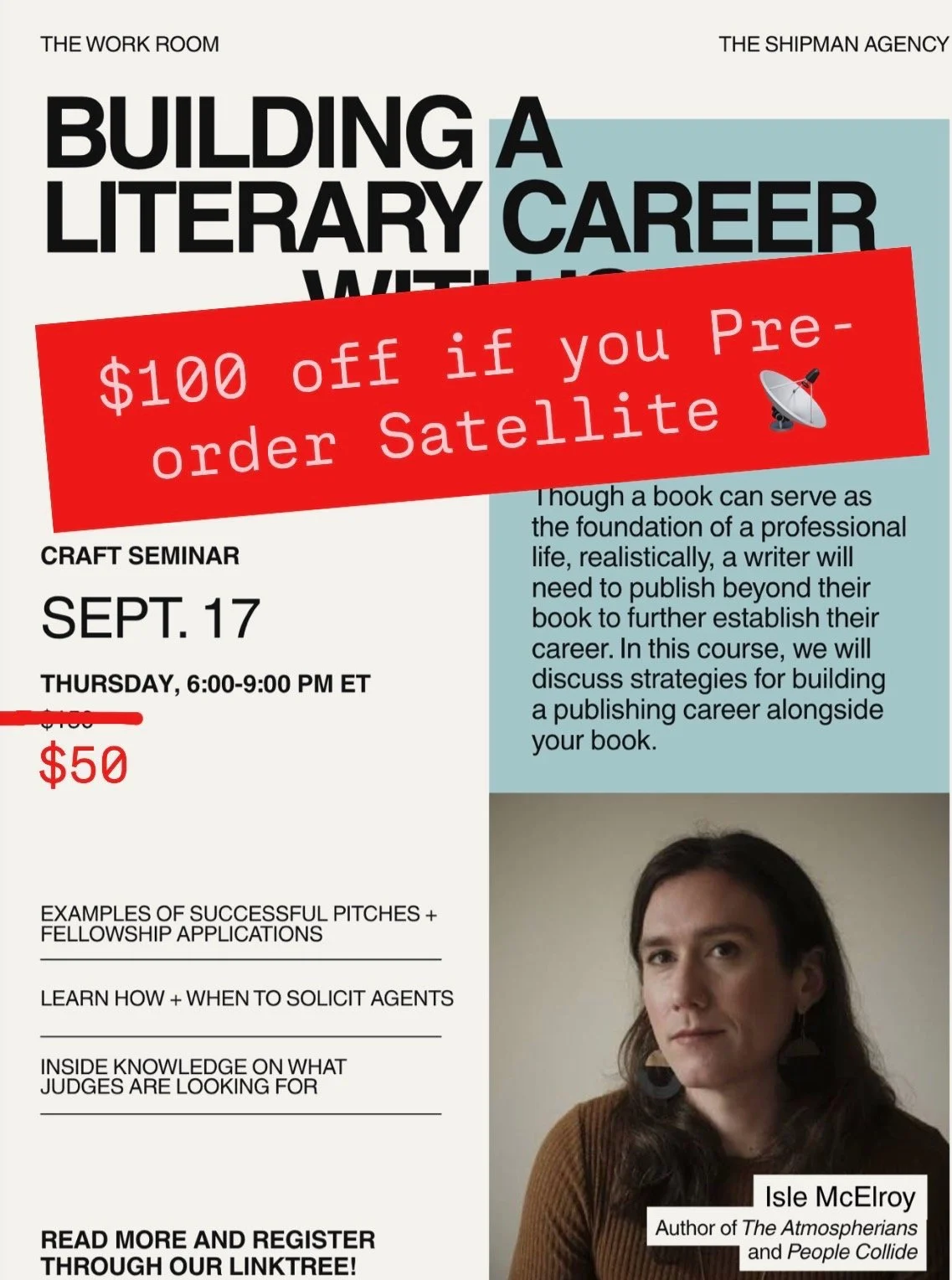
Beyond the Book: Building a Literary Career
Thursday, September 17, 2026
6:00-9:00 PM ET
$100 off if you pre-order a
hardcover copy of Satellite
A writing career often requires more than writing an excellent book. Though a book can serve as the foundation of a professional life, realistically, a writer will need to publish beyond their book to further establish their career. In this course, we will discuss strategies for building a publishing career alongside your book.
Students will learn how to pitch personal essays, trend pieces, and reviews to magazines. We will discuss strategies for applying to residencies, giving readings, contacting agents, and building a literary community.
PRE-ORDER SCHOLARSHIP: Anyone who pre-orders Isle McElroy's forthcoming novel Satellite (March 2027) can enroll in the class for only $50. To be approved for a scholarship, you will need to provide a copy of your pre-order receipt that includes your name and make the $50 under the same name through our payment portal by Wednesday, September 9.
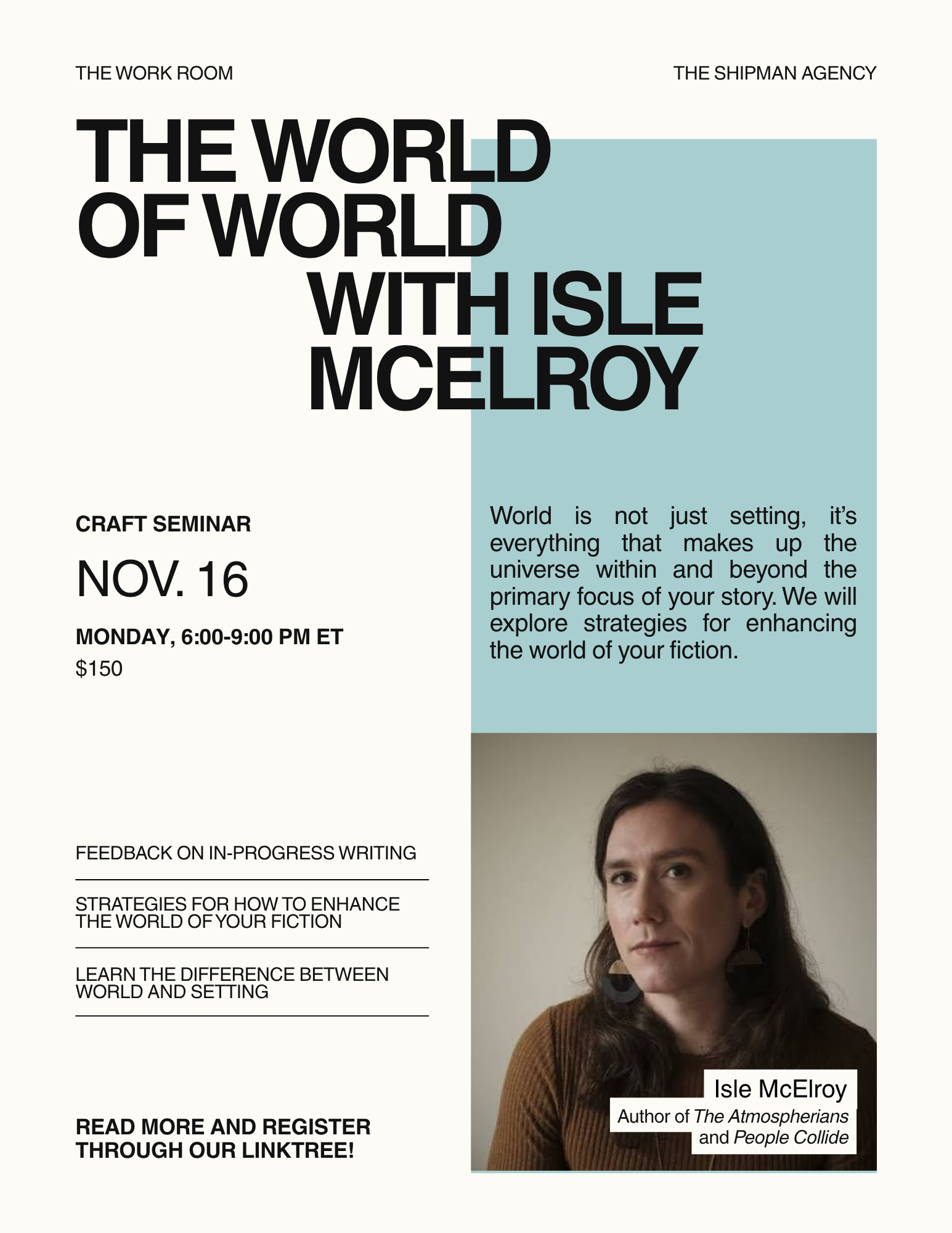
The World of World: Writing Outside Your Main Characters
Monday, November 16
6:00-9:00 PM ET
$100 off if you pre-order a
hardcover copy of Satellite
What would happen to your story if your main character died? Would life continue without them? If not, you likely haven’t done enough to create a rich, believable world.
In this class, we will discuss the importance of world in fiction. World is not just setting, it’s everything that makes up the universe within and beyond the primary focus of your story. We will explore strategies for enhancing the world of your fiction. How do you create conflict in the background of your novel or story? How do you set actions in motion that will later shape your main characters’ lives? This kind of world-building is important across genres: from literary realism to speculative romance. Creating a lively, functioning world is difficult but necessary to good fiction. It’s the difference between flat, forgettable storytelling and a rich, three-dimensional narrative that exists as its own separate universe. It’s the difference between a manuscript in a drawer and a book on display in a window.
PRE-ORDER SCHOLARSHIP: Anyone who pre-orders Isle McElroy's forthcoming novel Satellite (March 2027) can enroll in the class for only $50. To be approved for a scholarship, you will need to provide a copy of your pre-order receipt that includes your name and make the $50 under the same name through our payment portal by Wednesday, September 9.
Year-Long Novel Generator
Though most of writing a novel is a solitary act—done alone at a desk, in coffee shops, in bed, or even between stops on the subway—drafts rarely turn into published novels without supportive conversations and feedback from other writers. An enthusiastic, intimate circle of writers all engaged in the process can be the difference between a few opening chapters tossed in the trash and a full manuscript emailed to agents.
Every year, I offer a year-long first novel generator with twelve writers looking to complete their first novels. We read and discuss the debut novels of established authors, share our draft pages, and workshop full manuscripts. Along the way, we discuss our process both in class and outside of it. Class includes visits from established novelists, editors, and agents.
This year’s generator is currently underway, but the 2026-27 session will be begin in Fall 2026. Check back in the summer for enrollment and scholarship information. And feel free to reach out if you have questions!
Testimonials from Former Students